
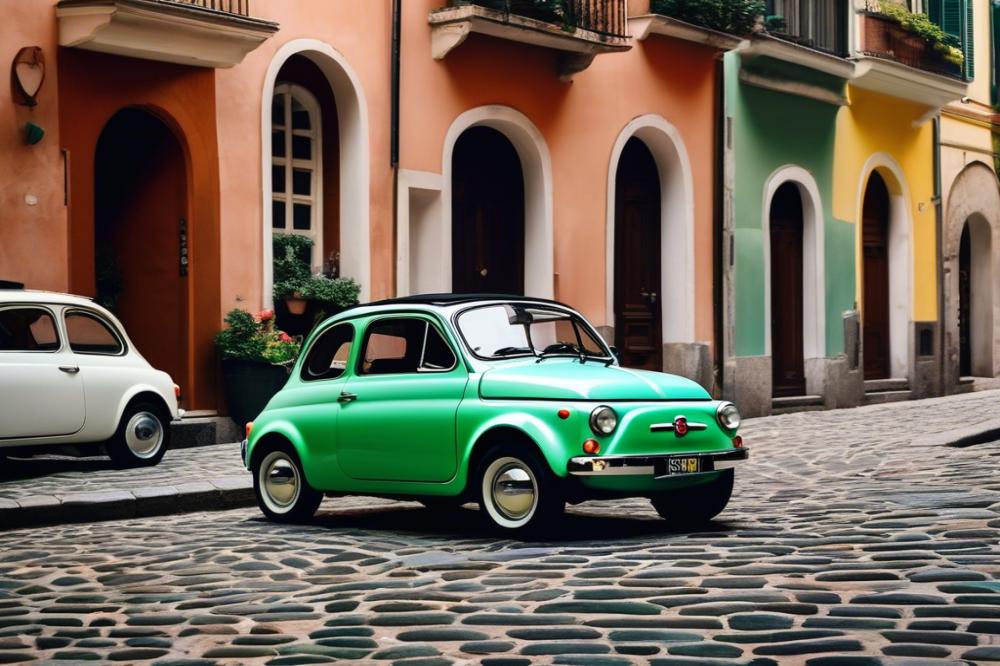
The Little Car That Became a cultural icon
The Fiat 500 is more than just a small vehicle; it represents a significant chapter in automotive history. Launched in the late 1950s, this charming city car became a symbol of post-war Italy. Its compact design delighted urban drivers while offering an efficient way to navigate the bustling streets of Milan. Vintage cars like the Fiat 500 are quintessential examples of what makes Italian automotive design so beloved.
This classic car is not merely about transportation; it embodies a lifestyle. Fashion aficionados often regard it as a stylish accessory in a busy world. Its curves and color options have made it a favorite in popular culture, being featured in films and art throughout the decades. The Fiat 500 has transcended its role as an economy vehicle; it has become a part of Italy’s national identity.
In many ways, it captured the spirit of an era—a time when people sought freedom and adventure, often in a little compact car. The Fiat 500 still evokes nostalgia, reminding us of Italian craftsmanship and clever engineering. The legacy it leaves behind is immense, influencing design choices for countless other vehicles. The impact of this little car continues to resonate today, as it remains a beloved choice for those who appreciate both culture and design.
The Birth of the Fiat 500
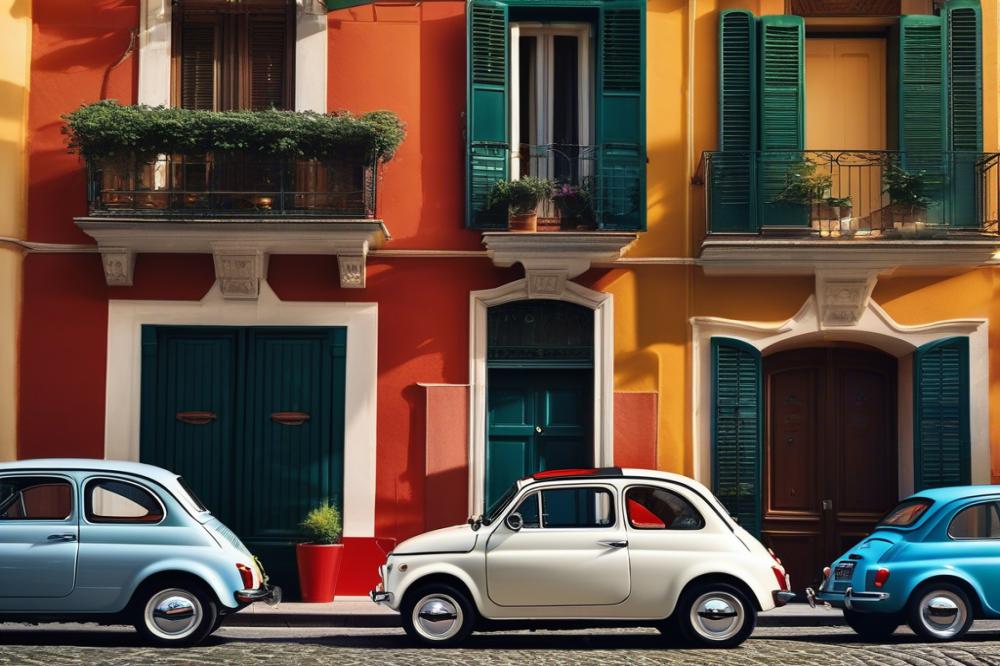
Historical Context in automotive history
After World War II, many countries faced a challenge in transportation. In Italy, the economy was in recovery. There was a strong need for affordable vehicles. This was a time when families needed reliable ways to get around. Larger cars were not practical for the streets of cities like Milan. The automotive industry needed to adapt, and a new solution was essential.
Development as a Compact Car and Economy Vehicle
Fiat saw an opportunity to create a compact car. Designers focused on the idea of an economy vehicle that was small yet efficient. The goal was to make something that was easy to drive and fit in tight spaces. This Italian car would not just be for the wealthy. Instead, it aimed to provide mobility to the everyday citizen. The concept of a city car began to take shape. Style combined with functionality became the mantra of the designers.
Launch Details in 1957 and Features of the Original Model
In 1957, the Fiat 500 officially launched. It quickly caught the attention of the masses. This little car was just 2.97 meters long, making it perfect for urban driving. The engine was modest, only 479cc, but it offered remarkable fuel efficiency. A two-door design with a front trunk allowed for practical storage. Vibrant colors and a stylish look contributed to its charm. The car resonated well with the public, who were looking for something reliable yet fashionable.
Impact on Mobility in Post-War Italy
The release of this compact car changed mobility in post-war Italy. Suddenly, more people could travel affordably. Streets became filled with these vintage cars, a testament to a new era. The Fiat 500 was not just a vehicle; it soon became a fashion icon. Popular culture embraced it, symbolizing freedom and progress. Commuters and families could now navigate the bustling streets with ease. This little gem redefined what it meant to drive in an urban environment.
Design and Engineering
Legendary design elements define the Fiat 500. Its rounded shape stands out in a world of angular vehicles. The compact size allows it to maneuver easily in busy city streets. With its small dimensions, this economy vehicle became a favorite among urban drivers. Many consider it a fashionable icon, merging usability with style.
When comparing with other vintage cars of the era, this Italian car shines brightly. Models like the Mini Cooper and VW Beetle share characteristics. However, the Fiat 500’s playful design sets it apart. Sleek lines and charming curves capture the spirit of Milan’s lively streets. This little car became a symbol of fun and freedom, unlike others in its class.
In terms of engineering, the Fiat 500 embodies several technological innovations for its time. The original model featured a rear-engine layout, which enabled enhanced handling. It also offered a small but efficient engine, appealing to budget-conscious drivers. With a 479cc two-cylinder engine, it produced a modest yet spirited horsepower. This compact car proved that good things come in small packages.
Italian craftsmanship plays a significant role in its design philosophy. Attention to detail is evident in every aspect, from the dashboard to the upholstery. Designers emphasized combining form and function seamlessly. The car’s interior features vibrant colors and clever layouts, making it a feast for the eyes. Such dedication elevated the Fiat 500 to more than just an automotive piece; it became a staple of popular culture.
Fiat 500 in Popular Culture
The Italian car has left its mark in films and television. Its charming design captivates viewers and brings a sense of nostalgia. Movies often use this compact car to portray a carefree lifestyle. Famous scenes feature couples cruising through picturesque streets, showcasing its appeal as a fashion icon.
In various forms of media, the Fiat stands out with its distinctive look. Art often depicts this vehicle as a symbol of freedom and adventure. Advertisements show it as the perfect city car, suitable for urban living. Not only does it represent elegance, but it also highlights the joy of driving.
Milan serves as a backdrop for many Fiat 500 moments. This city enhances its image as part of Italian automotive history. With high-end fashion and stunning architecture, the car becomes a natural fit in this environment. Both vintage cars and modern styles blend beautifully in this iconic location.
Popular culture embraces the Fiat’s lasting charm. Its design remains an inspiration for new generations. Enthusiasts and casual fans alike admire the enduring presence of this economy vehicle. The compact car continues to thrive in contemporary settings, proving that it is truly timeless.
The Fiat 500 Evolution
In the world of automotive history, the Fiat 500 stands out as an enduring symbol of style and practicality. Its journey began in the late 1950s with the introduction of the original model. This classic Italian car quickly captured the hearts of many. Compact and efficient, it was designed for urban life, perfectly suited for the streets of Milan.
Generations have come and gone, but each iteration has maintained that charming essence. The early models sported rounded edges and simple mechanics, making them easy to drive and maintain. Transitioning into the modern era, the latest versions feature advanced technology and sleek lines. Despite these innovations, the spirit of the original remains intact.
Vintage cars have seen a revival in interest over the years. Many enthusiasts now recognize the Fiat 500 as a true collector’s item. Its limited availability and iconic status make it a prized possession for many. Owning one of these classic vehicles is a badge of honor among car lovers. A pristine example speaks to its enduring legacy.
Design trends have not overlooked the influence of this little compact car. New city cars often draw inspiration from its charming aesthetic. Functionality paired with style has become a hallmark for modern vehicles. The Fiat 500 paved the way for what a fashionable economy vehicle can look like. As a fashion icon, it has left an indelible mark on popular culture, inspiring countless designs and advertising campaigns.
Each aspect of the Fiat 500’s evolution showcases its ability to adapt while holding true to its roots. From a humble economy vehicle to a sought-after classic, it reflects a unique blend of practicality and style. That blend continues to resonate with new generations seeking a blend of performance and design.
The Fiat 500 in the Global Market
Success is not just measured by sales, but by impact. Many people consider the Italian car a real gem. When the Fiat 500 hit the streets, it quickly made a name for itself beyond its homeland. This compact car appealed to cities all over the world, especially in crowded urban areas where space is at a premium.
In various markets, the 500 stands apart from other economy vehicles. Competitors often lack its charm and style. While many compact cars focus on efficiency, the 500 also brings personality to the wheel. Drivers find themselves not just purchasing a vehicle but embracing an experience, reflecting their lifestyle and dreams.
Cultural adaptations helped the car thrive in different regions. For instance, in Milan, it became more than just transportation; it transformed into a fashion icon. The design resonates with many who appreciate vintage cars and stylish aesthetics. Variants were introduced for specific markets, capturing local tastes while maintaining its core appeal.
In some countries, the Fiat 500 was infused with modern technology while retaining its classic look. This blend attracted younger generations who crave the nostalgic feel of a retro vehicle. Other markets showcased limited editions that celebrated local customs, further cementing its status in popular culture.
As this little car gained traction globally, it inspired community events and gatherings. Car enthusiasts showcased it at exhibitions, elevating its profile. In doing so, they proved that it is not merely a vehicle; it stands as a symbol of freedom and creativity. The essence of the Fiat 500 endures in the hearts of many across the globe.
The Enduring Legacy of the Fiat 500
The legacy of this Italian car is truly remarkable. Its design and spirit have made an imprint on automotive history. Many see it as more than just a vehicle; it represents a way of life. In bustling city streets, this compact classic has become synonymous with freedom and fun.
Over the decades, this little car has played a significant role in shaping automotive culture. As it sped into the hearts of drivers, the charm of its rounded body and vibrant colors caught the attention of many. Its influence can be felt in countless designs seen today. Manufacturers often draw inspiration from its playful simplicity, showcasing how effective classic ideas can be.
In today’s world, the Fiat 500 remains an enduring symbol of style and the joy of driving. It connects generations, reminding us of a simpler time when cars were not just machines, but expressions of personality. Communities of enthusiasts celebrate its quirks and history, ensuring that its story continues. The little car is cherished, far beyond the confines of its original purpose.
Overall, the Fiat 500’s ability to adapt while holding onto its roots is what keeps it relevant. This beloved car has become an icon, proving that some designs stand the test of time. No matter where you go, its spirit lives on, inspiring both car lovers and casual drivers alike. It’s more than a car; it’s a cultural phenomenon.

