
Introduction
The Roman Navy played a crucial role in the vast Empire, serving as a formidable force on the Mediterranean Sea. Without a powerful navy, Rome could not have maintained control over its extensive territories. Trade routes and military movements relied heavily on naval strength. As such, the importance of naval power became evident in ensuring the security of the Empire. The fleet protected coastlines, transported troops, and engaged enemies, demonstrating its central role in Roman military strategy.
Sailing was not just for the elite. It was an essential aspect of daily life in ancient Rome. Merchant ships carried goods, while warships like galleys and triremes engaged in battle. Each vessel was meticulously designed for speed or combat. This diversity reflects the adaptability of Roman naval architecture. Various ship types had different purposes, contributing to the fleet’s overall effectiveness. Overall, the #main_keyword# constructed by Romans showcased their ingenuity and emphasis on maritime capabilities.
Exploring the size and organization of these fleets helps us understand their impact. Records reveal varying numbers of ships deployed at different times. Historians estimate that the fleet could comprise hundreds of vessels during wartime. Such statistics highlight the scale of naval operations. Furthermore, their dimensions were carefully crafted to fit the strategic needs of the Empire. Ancient sources offer glimpses into the ship designs and dimensions, allowing us to piece together the past. For those eager to delve deeper, there are numerous resources available that discuss #anchor_text_1# in further detail.
Naval power not only ensured military dominance but also facilitated trade across the seas. Rome’s economy thrived with the support of its merchant fleet. The relationship between commerce and military might became unmistakable. Control of maritime routes resulted in wealth, resources, and stability. For those interested in the naval strategies of the Roman Empire, #anchor_text_2# provides excellent insights into their intricate naval networks.
Historical Context of Roman Naval Fleets
The development of naval power in ancient Rome was gradual but significant. Initially, Rome focused on land warfare. However, as trade and territorial expansion became priorities, a strong navy emerged. This shift was not sudden; it was a response to the needs of an expanding empire.
Key conflicts played a crucial role in shaping the Roman Navy. The Punic Wars against Carthage were particularly important. These wars began in 264 BCE and lasted for more than a century, with naval engagements being vital. The Battle of Mylae in 260 BCE showcased Roman innovation. They engaged their enemies with enhanced ships and tactics, marking their transformation into a formidable naval force.
Competing fleets prompted rapid changes. During the Second Punic War, commanders like Scipio Africanus emphasized naval strength. By this time, Romans learned to harness the sea for both military and commercial purposes.
Comparisons with contemporary naval forces reveal interesting insights. In the ancient world, a fleet comprised triremes and quinqueremes. These vessels were quite different from modern ships. They relied heavily on oarsmen alongside sails. In contrast, today’s ships use advanced technology, including radar and missile systems.
While Rome inhabited a world with limited naval technology, their strategic use of ships was impressive. Fleets protected trade routes and secured coastal territories. The Romans understood the importance of sea power, much like modern nations recognize today.
Naval prowess influenced political outcomes in ancient Rome. Just as it affects diplomacy in our time, control of the sea provided leverage. Successful naval operations often shaped the fate of empires. Understanding this evolution adds depth to our knowledge of ancient powers. These historical elements connect directly to the growth of naval capabilities in later centuries.
Structure of Roman Naval Fleets
Organization of Fleets: Main Types and Roles
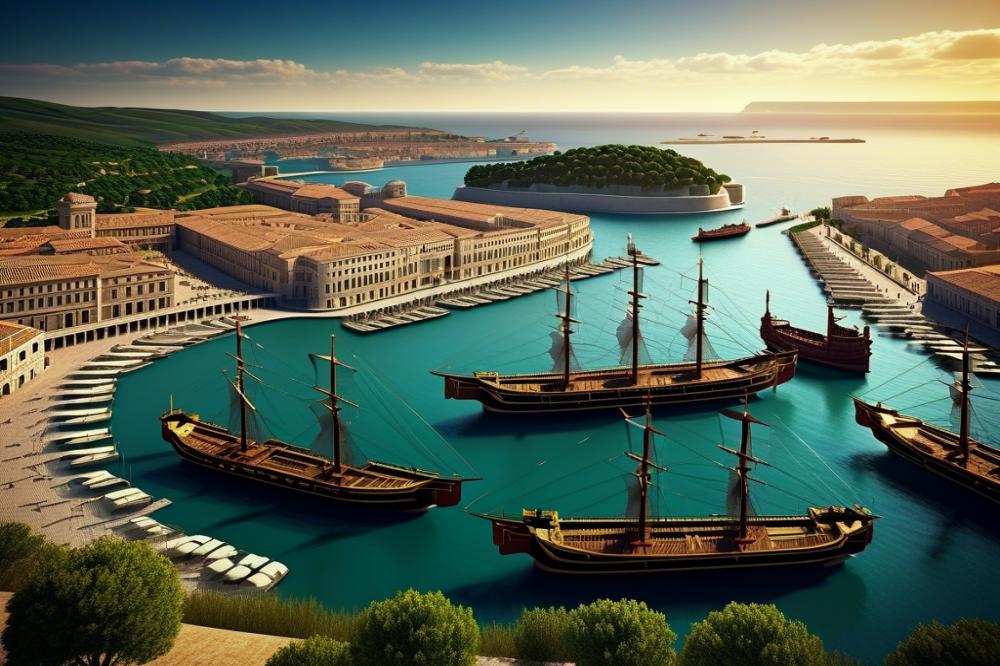
Roman naval fleets were structured to fulfill a variety of roles. Generally, they were divided into two main types: the classis and the smaller patrolling squadrons. Classis fleets operated from major ports and engaged in large-scale battles. Smaller groups handled coastal defense and piracy control. Oared galleys, often fitted with sails, formed the backbone of these fleets. Their design focused on speed and maneuverability, essential in naval warfare. Cargo ships also played a part. They transported supplies and troops, supporting the larger military efforts.
Command Hierarchy and Fleet Administration
The command structure of these fleets was intricate. At the top, an admiral, known as the praefectus classis, held significant authority over operations. Below him, various ranks of officers executed orders and managed ships. Each vessel had a captain, called a navarchus, responsible for crew and ship maintenance. Administrators supported these leaders. They managed logistics, personnel, and communication within the fleet. This organization allowed for efficient naval operations. Captains often reported to the admiral, ensuring that decisions were swiftly communicated.
Notable Naval Bases and Their Strategic Significance
Several key naval bases played critical roles in Rome’s maritime strategy. Ostia, located at the mouth of the Tiber River, served as a vital port for the capital. Its proximity to Rome allowed for quick deployment and support of naval forces. Alexandria was another noteworthy base, connecting Rome to trade routes in the East. The strategic location helped secure Rome’s interests in the Mediterranean. Additionally, Misenum emerged as a crucial naval center, especially during the empire’s height. It facilitated military readiness and presence in the Tyrrhenian Sea.
Base establishments not only provided logistics but also fostered shipbuilding. Skilled artisans and engineers worked together, creating stronger and faster ships. This support network amplified the strength of Roman naval presence. Commanders observed the seas from these strategic points, ready to respond to threats. The structure of the naval forces was adaptable, meeting the challenges of war and trade alike.
Size of Roman Naval Fleets
Throughout history, estimates of Roman fleet sizes have varied greatly. During the Republic, naval power wasn’t as prominent. Early on, fleets were relatively small. However, by the late Republic and early Empire, significant changes took place. Leaders like Julius Caesar expanded their naval forces dramatically.
Different emperors had varying naval strengths. For example, Augustus established the Classis Misenensis with around 200 ships. Vespasian, on the other hand, enhanced the fleet further. His focus on naval security reflected the growing importance of controlling trade routes and protecting the empire’s coastlines.
Case Studies of Notable Fleets
The Battle of Actium in 31 BC is a prime example of fleet usage. Mark Antony and Cleopatra faced off against Octavian’s forces. Antony deployed over 500 ships, but Octavian’s fleet had around 400 vessels. The decisive victory for Octavian marked a turning point in history, underscoring the strength of organized fleets.
Another significant confrontation occurred during the First Punic War. The Roman fleet of around 330 ships engaged Carthaginian forces. This massive armada helped establish Rome as a dominant naval power, shifting the balance in the Mediterranean.
In later years, Emperor Trajan led naval campaigns in the Dacian Wars. His troops relied heavily on the Classis Pontica, which consisted of many warships. Trajan’s ability to combine land and sea operations showcased the importance of a strong navy in expanding Roman influence.
Dimensions and Types of Ships
Overview of Ship Types
Roman naval fleets included various ship types. Triremes, for example, were among the most common vessels. These ships had three rows of oars on each side. With a length of around 37 meters, they were built for speed and agility. Quinqueremes came into play later, boasting five rows of oars. This design allowed for greater firepower and better endurance on the water. Other types also included cargo ships and smaller craft, each serving distinct roles within the fleet.
Variations in Size and Design
Different vessels were tailored for specific purposes. Military ships prioritized speed and maneuverability. Cargo vessels, on the contrary, focused on capacity. For instance, a trireme could carry up to about 200 men, while a large quinquereme might hold 300 troops or more. The dimensions of smaller craft, like fishing boats, varied widely. Sizes could range from a modest 10 meters to larger merchant ships stretching beyond 30 meters. These design choices catered to the needs of trade, warfare, and transport.
Construction Techniques and Materials Used
Shipbuilding in ancient Rome relied on skilled craftsmanship. Wooden planks formed the hulls, providing both strength and flexibility. Generally, the main materials included oak and pine. The use of iron nails increased durability, sealing each joint effectively. Artisans applied a technique known as mortise and tenon joints to connect pieces. Some ships featured a flat bottom, enabling them to navigate shallow waters, crucial for coastal and riverine operations. The combination of innovative methods and quality materials contributed to the effectiveness of Roman naval power.
Logistics and Maintenance of the Fleets
The success of Roman naval fleets depended on well-organized supply chains. These systems ensured that ships received necessary provisions and equipment. Transporting food, water, and materials was a massive responsibility. Roman ports played a crucial role in this process. Their bustling activities supported the fleets located at sea or docked for repairs.
Main challenges emerged from keeping large fleets operational. Maintaining ships required extensive resources, not only for repairs but also for upgrades. The sheer number of vessels meant there were always some in need of attention. Crews had to stay busy, ensuring that every ship was ready for action. Additionally, harsh maritime conditions could lead to wear and tear, increasing maintenance demands.
Logistics deeply impacted naval effectiveness. Efficient supply routes allowed fleets to remain active longer during campaigns. Limited resources could cripple naval operations. Long voyages required careful planning to avoid shortages. Trusting in local suppliers was critical, but those relationships could be unpredictable. Naval commanders had to balance readiness with the realities of supply availability.
Support systems involved not just the ships, but also the men and women behind the scenes. Workers at ports handled loading and unloading supplies. They managed the intricate task of knowing what each ship needed. Without effective cooperation, naval efforts could falter. As Rome expanded its influence, the complexity of these logistics grew tremendously.
In observing Roman maritime power, one sees how logistics shaped victories and defeats. Fleets faced obstacles, including weather and enemy blockades. Yet, those that managed their supply chains effectively often triumphed. Fulfilling the needs of a large naval team required discipline and strategy. Without proper support, a fleet could quickly degrade into an ineffective force.
The Role of the Navy in Roman Society
Naval victories played a significant role in shaping Roman culture. Victories at sea were celebrated as glorious achievements. They not only elevated the status of commanders but also fostered a sense of unity among the Roman people. Pride in these accomplishments manifested in public festivals and military parades. Citizens rejoiced in the remarkable feats of their navy. Such events served as reminders of Rome’s power and reach.
Art and literature often reflected the might of Rome’s naval strength. Poets and playwrights drew inspiration from maritime exploits. They extolled the virtues of sea battles and the bravery of sailors. Mosaics and sculptures depicted scenes of naval warfare. These artworks conveyed the power and majesty of Roman fleets. They created a lasting symbol of dominance across the Mediterranean region.
The military implications of naval dominance were vast. Control of sea routes meant access to resources and trade. It also allowed Rome to project power beyond its borders. Economically, this control resulted in wealth. Successful naval campaigns opened new trade networks. This influx of goods benefited the empire’s economy significantly. Citizens experienced improved living standards as a result.
Dependency on the navy for defense was a key aspect of Roman strategy. Enemies could threaten coastal cities and trade routes. A robust fleet provided security and stability for trade. This, in turn, allowed the economy to flourish. Naval forces also played a role in supporting land troops during campaigns. The collaboration between the two branches of the military was essential.
Overall, the navy was integral to the Roman perspective of power. It shaped both the cultural and economic fabric of society. Victories at sea resonated deeply in the hearts of Roman citizens. The navy was more than just military force; it was a symbol of Roman identity. The legacy of naval power continues to echo through history.
Final Insights on Roman Naval Fleets
In summary, the Roman naval fleets showcased impressive size and intricate structure. Numbers varied throughout history, but large fleets were often crucial to securing trade routes and defending territories. Ship types like triremes and liburnians played vital roles in naval strategy. These vessels, built for speed and maneuverability, allowed Romans to dominate in maritime conflicts.
Looking back, the legacy of Roman naval power is evident. Their ability to project force across seas helped expand their empire. Control of the Mediterranean was a critical factor in their military and economic success. Maritime supremacy allowed for cultural exchange and the spread of ideas throughout the empire.
This discussion about the dimensions and organization of Roman fleets highlights their significance in ancient history. Naval strength was not just about numbers; it represented a sophisticated approach to warfare and trade. Understanding these aspects offers insight into how a civilization maintained its power over a vast region. The lessons learned from Roman maritime strategy and organization remain relevant today.
Ultimately, studying the Roman navy provides invaluable perspectives on how naval capabilities can shape history. While their methods may differ from those of modern navies, the fundamental importance of naval force endures. The influence of Roman seafaring can still be felt, reminding us of the power that comes from the sea.
For those interested in maritime history, learning about the Roman approach to naval strategy can be enlightening. It opens up many avenues for further exploration. The rise and fall of empires are often tied to their ability to navigate and control waterways. The story of Roman naval fleets is a compelling chapter in this larger narrative.

