
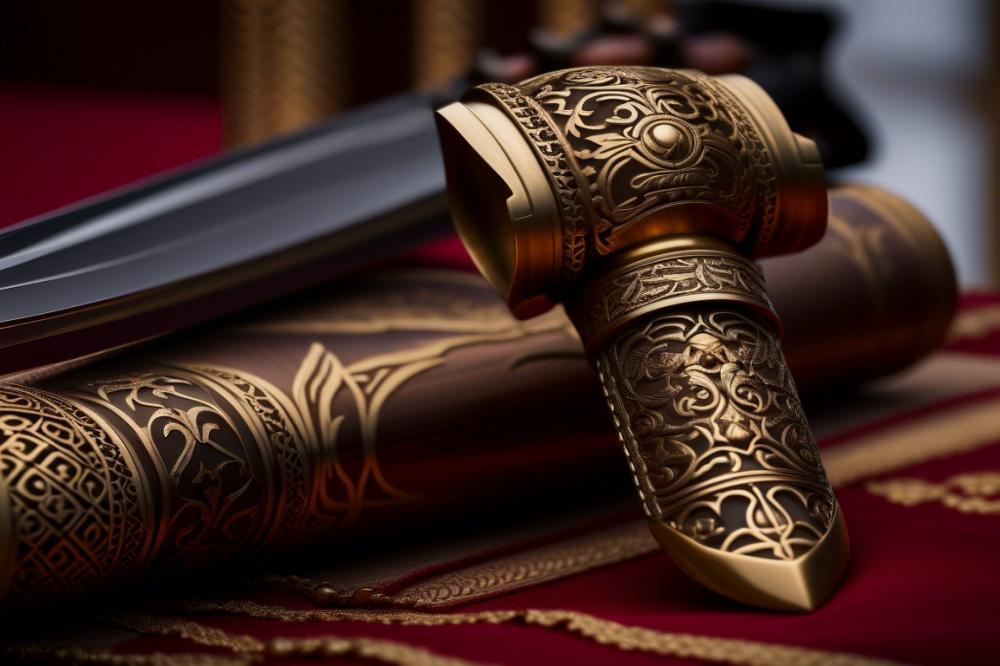
Roman Daggers: The Pugio and its Function in Combat
The Roman military is renowned for its discipline, organization, and effectiveness. Soldiers donned an array of armor, each element carefully designed for protection and mobility. Among these, weapons varied widely, but one of the most striking was the dagger, particularly the pugio. This #main_keyword# served as a critical sidearm for Roman soldiers, complementing their primary weapons and tactics.
Pugio-associated combat was not merely about brute strength. Given the close-quarter nature of many battles, having a dagger readily available could determine life or death. While the gladius, or sword, was the primary weapon of choice, the pugio provided a vital backup. Its design allowed for quick, efficient strikes when enemies closed in too closely.
Daggers played an influential role beyond mere self-defense. By integrating these smaller weapons into their strategies, Roman soldiers could increase their flexibility on the battlefield. In tight situations, when drawing a longer sword would be impractical, the pugio became an essential tool. It showcased the clever adaptations Romans made in the art of war.
The importance of the pugio in Roman military culture cannot be underestimated. It held symbolic value, embodying the spirit of the soldier. Many wore it as part of their uniform, reflecting both status and readiness for combat. In this way, the pugio was not just a weapon; it was an integral element of military identity. Understanding the role of this dagger offers insight into Roman combat strategies and their overall approach to warfare.
For anyone interested in ancient military history, the pugio stands out as an intriguing topic. Exploring its physical features and uses can reveal much about the life of Roman soldiers. It’s a fascinating example of how a simple tool could have profound effects on combat outcomes. Discover more about this important aspect of Roman warfare in the sections that follow, particularly how the pugio functioned alongside other weaponry.
Historical Context of the Pugio
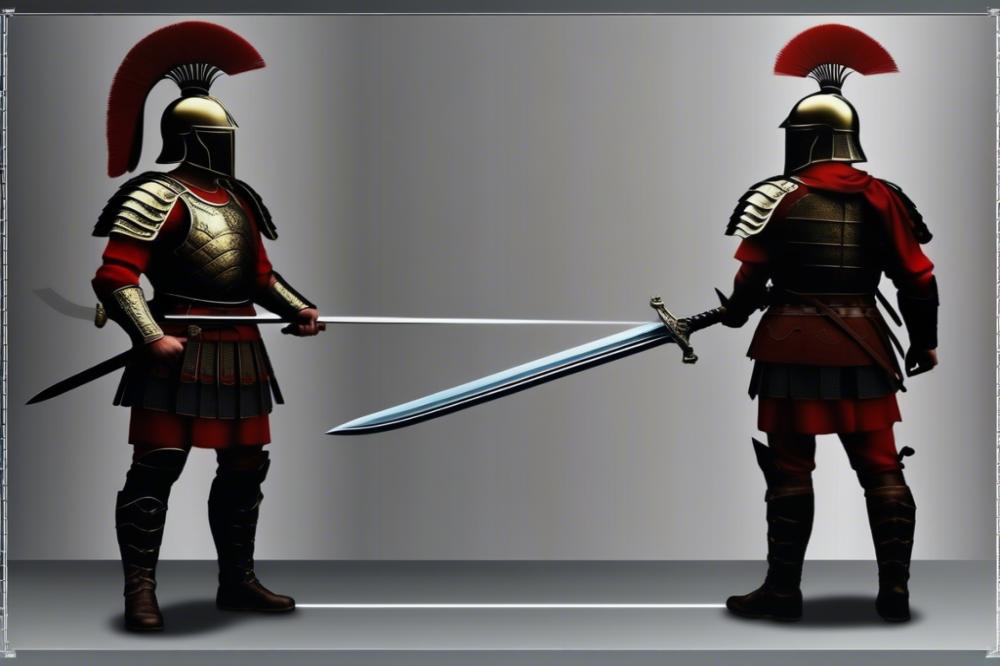
The pugio is a dagger that was an integral part of a Roman soldier’s arsenal. It first emerged around the third century BCE. Initially, these weapons were designed as tools for daily life, but they quickly adapted for use in combat. Soldiers realized the pugio could serve as a secondary weapon during battles. This transition highlights its practical role in warfare.
Origins and Development of the Pugio
The origins of the pugio can be traced back to the ancient Mediterranean. Its design evolved over centuries, reflecting the changing needs of warriors. Unlike larger swords, it was compact and easy to handle. Early versions featured a leaf-shaped blade, ideal for both thrusting and slashing. As time went on, the pugio became more ornate, often decorated with intricate designs.
Differentiation from Other Roman Daggers
What sets the pugio apart from other daggers of the time is its unique shape and size. Many traditional daggers were either too large or unwieldy. Pugiones were specifically crafted for close-quarter combat. Their blades ranged in length, generally from six to twelve inches. This distinctive feature allowed for quick draws and swift strikes in battle.
Cultural Significance of the Pugio in Roman Society
Beyond its practical use, the pugio held cultural importance in ancient Rome. It symbolized bravery and status among soldiers. Officers often had elaborately designed pugiones, reflecting their rank. In times of peace, these daggers served as symbols of authority and power. Owning a pugio was not just about functionality; it also demonstrated loyalty to the military. Eventually, the presence of the pugio became common in Roman art and literature, further emphasizing its role in society.
Design and Construction of the Pugio
Materials Used in Pugio Manufacture
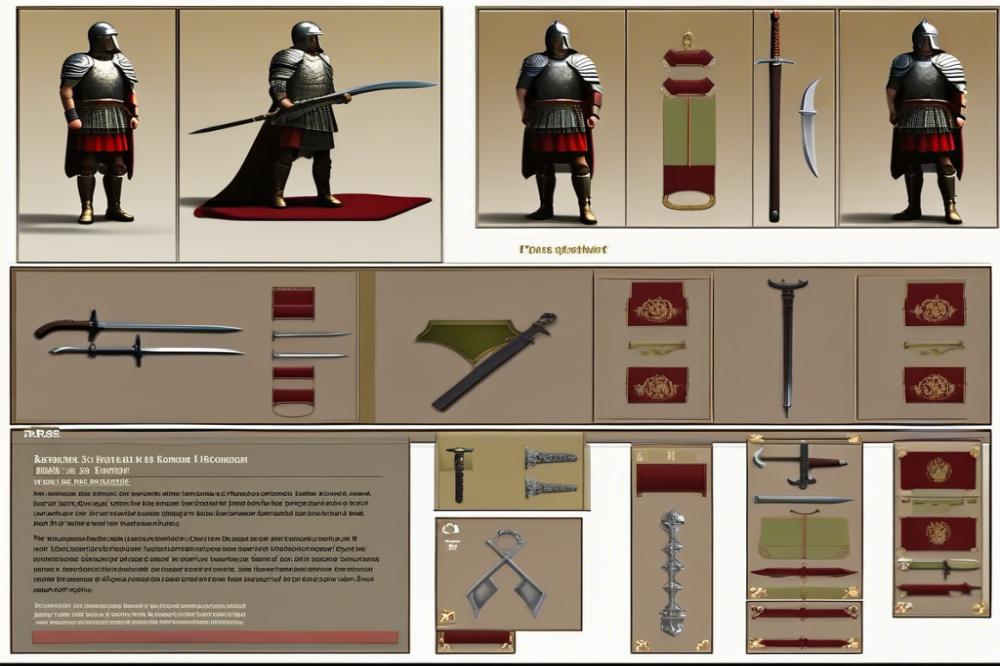
The pugio was crafted with care, primarily using iron or bronze. These metals provided the necessary strength for combat situations. Sometimes, brass was also utilized in production. The choice of material often depended on availability and the intended use of the dagger. The blades needed to endure the rigors of battle while remaining sharp enough for quick strikes. Handles were typically made from wood, bone, or metal, creating a sturdy grip for the user.
Different Shapes and Sizes of Pugiones
Pugiones varied in form and dimensions. Some featured straight blades, while others had a more curved design. The length of these daggers could range from about 12 to 15 inches. Variations allowed for personalization among soldiers. Many opted for a style that best suited their combat techniques. The diverse shapes provided options for different grips and strikes, catering to individual fighting styles.
Artistic Decorations and Inscriptions
Decoration played a significant role in the design of the pugio. Many daggers showcased intricate carvings. Some even included inscriptions that held personal or cultural significance. Decorative elements often depicted gods, animals, or symbols of rank. These embellishments made each weapon distinct. A pugio was not just a tool for fighting; it was also a reflection of the owner’s identity. The artistry demonstrated the skill of the smith while showing off the owner’s status on the battlefield.
Function of the Pugio in Combat
Close-quarter battle applications
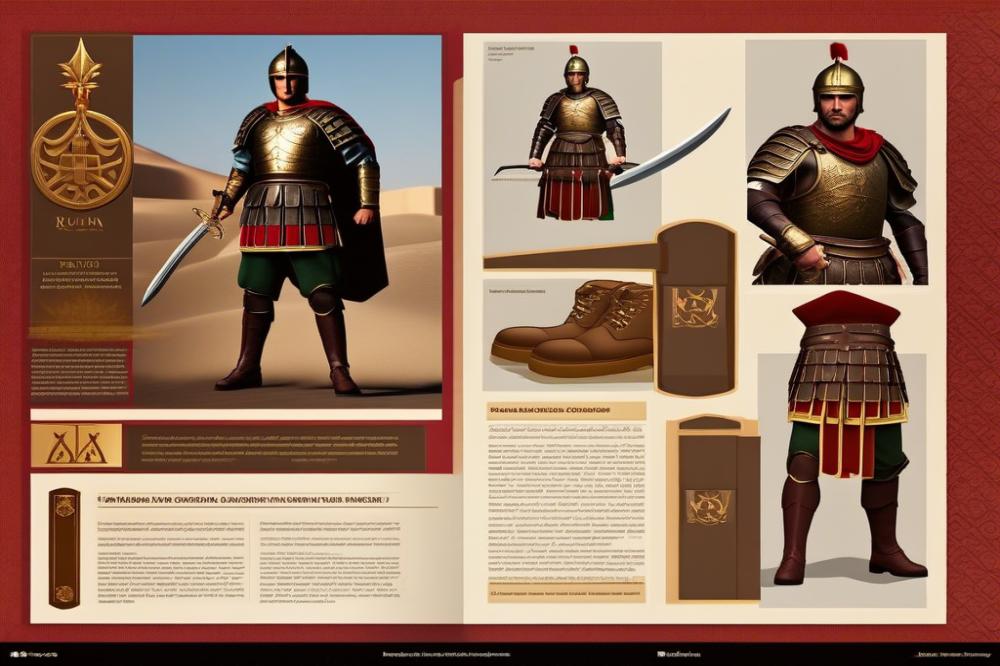
The pugio, a Roman dagger, served well in close-combat situations. Soldiers often found themselves in tight spaces where a longer weapon was impractical. This short blade allowed for quick and decisive strikes. In many cases, opponents would be within arm’s reach. The compact design made it easy to wield and maneuver. Fighting in crowded formations, soldiers could not rely solely on their primary weapons.
Role as a secondary weapon for soldiers
As a secondary option, the pugio provided versatility. Many Roman troops carried this dagger alongside their primary arms. If a soldier dropped their sword or found it ineffective, the dagger became essential. Its lightweight nature allowed for ease of carry without weighing down the soldier. When engaged in battle, they could draw their pugio rapidly, ensuring they remained a threat. This made it a crucial part of any soldier’s gear.
Situational use in ambushes and surprise attacks
Ambushes often relied on stealth and surprise. Here, the pugio played a vital role. In unexpected confrontations, the element of surprise gave attackers a significant advantage. A well-placed stab with a dagger could shift the tide of a skirmish. Furthermore, its silent application minimized noise, keeping foes unaware. Pugio users could strike swiftly and retreat before enemies could regroup. The effectiveness of this weapon in covert operations should not be underestimated.
The Pugio in Roman Military Hierarchy
Usage among Various Ranks and Units
The pugio, while primarily known as a soldier’s dagger, played a vital role across different ranks in the Roman military. Commonly, legionaries carried it as part of their standard equipment, alongside the gladius. Auxiliary troops also utilized this weapon, often adapting its use to fit specific combat situations. Officers, particularly centurions, bore the pugio as a symbol of authority. Their versions were often more ornate, reflecting their higher status within the military structure. This dagger served not only as a tool for combat but also as a mark of rank and responsibility.
Comparison with Other Roman Weaponry
In contrast to the gladius, which is famed for slashing in hand-to-hand encounters, the pugio was shorter and more suited for close quarters. Its design allowed for thrusting attacks, making it efficient in tight situations. Romans also utilized other weapons, such as spears and long swords, depending on the battle scenario. Archers and cavalrymen carried their own preferred arms, which limited the pugio’s function among those units. However, in situations where agility was paramount, the pugio proved its worth, allowing for quick strikes and swift maneuverability.
Cultural Implications of Bearing a Pugio
Culturally, carrying a pugio held significant meaning in Roman society. Exclusively worn by soldiers, it became synonymous with bravery and military service. A soldier presenting a pugio in public could demonstrate his commitment to duty. The crafting of the dagger itself often showcased artistry, as each piece could tell a story through its design. Sometimes, the weapon became personalized, with ownership reflecting one’s status and achievements. Thus, the pugio transcended mere functionality; it embodied the values and honor of the Roman military ethos.
Legacy and Influence of the Pugio
The pugio, a dagger used by Roman soldiers, has left a fascinating mark on history. Various cultures after Rome adopted elements of its design. The curved blade and distinct shape found their way into medieval weaponry. These adaptations highlight how effective designs can transcend time.
Dagger styles today often echo traits of the pugio. Many modern interpretations draw inspiration from its form. Knife makers appreciate the pugio’s balance and versatility, thus leading to its influence in crafting today’s blades. This impact shows just how significant Roman weaponry was in shaping the art of dagger making.
In military history, the pugio holds a special place. Its use in combat situations signifies the blend of utility and style. Soldiers relied on it not only as a weapon but also as a tool for survival. The pugio was suited for close combat, making it essential during the era of the Roman Empire.
Enthusiasts of historical reenactments often choose replicas of this dagger. Such events showcase its role in martial practices of the past. Participants appreciate the craftsmanship and attention to detail, which reflects the importance of this instrument. Understanding its use in battle highlights how the pugio has influenced modern military reenactments.
Final Thoughts on the Pugio’s Role and Legacy
The pugio was more than just a weapon; it played a significant role in Roman combat. This short dagger was primarily used for close-range fighting. Soldiers often relied on the pugio for its quick draw and ease of use during intense battles. In many skirmishes, it served as a backup when larger weapons failed or were lost. This adaptability within the battlefield was crucial for Roman troops who faced a wide range of enemies and combat scenarios.
The impact of the pugio extends beyond its physical use. It reflects the broader strategies of Roman military practices. Each soldier carried one, symbolizing their readiness for combat. The pugio indicated the importance of being prepared for any situation. Such weapons were not merely tools of war; they showed the Roman emphasis on discipline and training. A soldier understood that proficiency with the pugio could mean the difference between life and death.
Reflecting on its legacy, the pugio also provides insight into the Roman cultural values surrounding warfare. Art, literature, and even archaeological finds illustrate its prominence. Today, historians study these findings to grasp better how Roman soldiers lived and fought. The pugio remains a critical piece in understanding the complexities of Roman military life. Its continued fascination among scholars highlights its importance not just in warfare but also in the broader narrative of Rome’s history.
In summary, the pugio exemplified the Roman military’s practicality and sophistication. It continues to interest everyone fascinated by ancient combat tactics and culture. The examination of this dagger allows modern readers to appreciate the strategic thinking of Roman commanders and troops. Thus, exploring the pugio enhances our comprehension of a time that continues to shape our world today.
To learn more about Roman military equipment and their impact, check out #anchor_text_3#. This exploration can deepen your understanding of longstanding traditions in warfare through history with #anchor_text_4#.

