
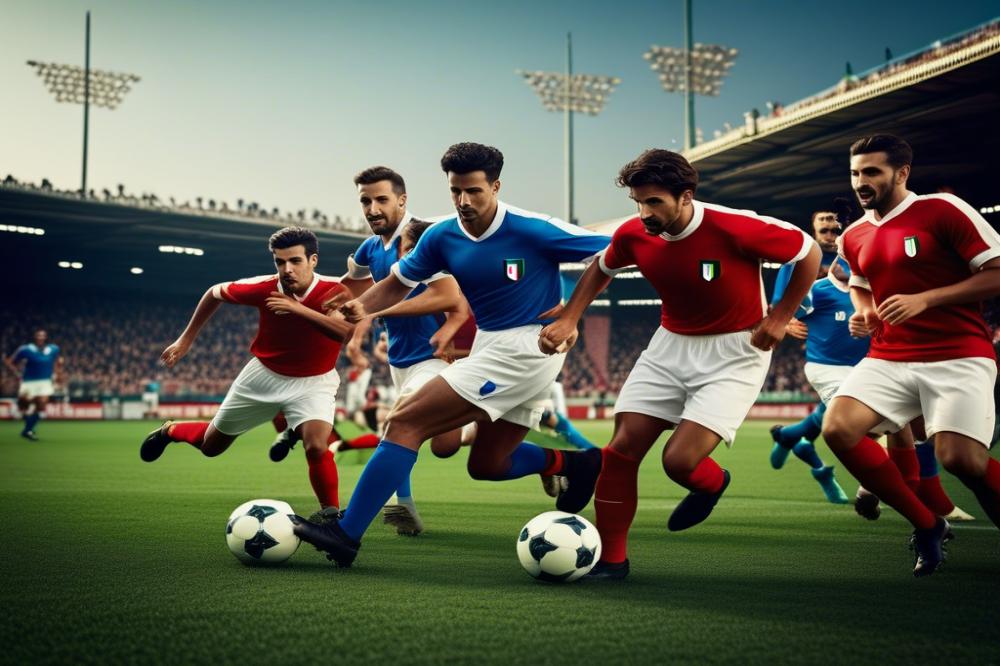
The Evolution of Football in Italy: From local clubs to global fame
Football in Italy is more than just a sport; it is a way of life. From the streets of small towns to the iconic stadiums of major cities, the passion for the game runs deep in the hearts of the people. local clubs serve as the backbone of communities, bringing fans together to celebrate victories and endure defeats. Throughout the years, Italian football history has been shaped by countless moments of brilliance and heartache, making the landscape rich and diverse.
The importance of football in Italian culture cannot be overstated. It is a source of pride, a unifying force, and a topic of discussion in nearly every household. Legendary players like Paolo Maldini and Roberto Baggio have left an indelible mark on the game, inspiring generations to dream of glory. Their contributions helped elevate the status of Serie A, one of the top leagues globally, transforming it into a stage where talent shines. This love for the game is also reflected in fierce rivalries, such as the longstanding battles between Juventus and AC Milan, which showcase the passion that fuels Italian fans.
As time went on, the transition from local clubs to global fame became evident. Italian teams began to excel internationally, achieving success in European competitions. Clubs like Inter Milan and AS Roma have not only attracted local talent but also stoked interest from across the seas. With youth development strategies gaining traction, promising players now emerge from academies, ready to make their mark on the global stage. Football culture in Italy, characterized by its tactical sophistication and emotional intensity, continues to captivate audiences worldwide.
This evolution showcases a fascinating journey. What started as a community pastime has blossomed into a cultural phenomenon with immense global influence. Football Italy is a testament to this transformation, celebrating both the history and the future of the beautiful game.
Historical Foundations of Football in Italy
Early beginnings of football in Italy
Football’s journey in Italy began in the late 19th century. The sport was introduced by British expatriates who played in cities like Turin and Genoa. This new game quickly sparked interest among locals. Soon, groups of enthusiasts began organizing their matches. Street games evolved into more structured activities, laying the groundwork for Italy’s future football culture.
Development of local clubs and regional competitions
As excitement grew, local clubs emerged across the country. Many towns established their teams, fostering community spirit. Clubs like Genoa CFC and AC Milan became powerhouses in their regions. These early teams played friendly matches that eventually formed the basis of regional competitions. Rivalries developed, igniting passion among supporters. Local derbies captured the hearts of many, and football began to unify communities.
Formation of national leagues and associations
The need for organization led to the creation of national leagues. In 1898, the Italian Football Federation was founded. This organization helped structure the growing sport. The first official championship took place in 1898, featuring several clubs vying for glory. Over time, the league system evolved, attracting legendary players to showcase their talents. International success followed, thrusting Italian football onto the global stage. Youth development programs became crucial for nurturing fresh talent. The focus shifted to refining football tactics, ensuring clubs remained competitive. Today, what started as a local pastime has transformed into a significant part of Italian football history.
The Rise of Legendary Players
Italian football has seen the emergence of iconic figures whose skills and charisma have shaped its landscape. Players like Giuseppe Meazza, Paolo Maldini, and Alessandro Del Piero have become symbols of excellence. Their influence has extended beyond the pitch, impacting the culture and emotional fabric of the sport in Italy.
Giuseppe Meazza: A Pioneer
Considered one of the greatest forwards in the history of the game, Giuseppe Meazza dazzled fans with his skill during the early 20th century. Playing for local clubs such as Internazionale and AC Milan, Meazza won numerous titles. His ability to score and assist was unmatched. People admired his exceptional dribbling and tactical awareness. His legacy continues to inspire young players today.
Paolo Maldini: The Definition of Class
When one thinks of defensive mastery, Paolo Maldini’s name stands out. Spending his entire club career at AC Milan, he became a pillar of strength in their defense. Maldini was known for his reading of the game, making him a nightmare for forwards. With seven Serie A titles and five Champions League trophies, his contributions helped elevate club football on an international stage. Fans still celebrate his loyalty and professionalism.
Alessandro Del Piero: A Creative Force
Alessandro Del Piero brought flair and creativity to the forward position. His time at Juventus transformed the club into a European powerhouse. Del Piero’s free-kick abilities and knack for scoring pivotal goals made him a crowd favorite. He played a significant role in defining the club’s identity during its golden years. Del Piero is more than just a player; he represents a generation of fans and players who cherish the beautiful game.
Impact on Club Success and Football Culture
The impact of these legendary players extends beyond their individual achievements. Their presence has fostered fierce rivalries, particularly between clubs like AC Milan and Inter Milan. This intense competition has enriched Italian football history. Clubs invest heavily in youth development to cultivate future legends, inspired by the heroes of the past. These players have inspired a culture that values not only success but also artistry on the field. Their influence echoes in contemporary tactics and styles of play, ensuring a rich legacy for future generations.
Football Tactics and Style
Evolution of football tactics in Italy
The evolution of football tactics in Italy has been remarkable. From the early days, local clubs focused on simple formations and basic strategies. However, over the decades, a shift occurred. Coaches began to experiment with various approaches, leading to more sophisticated game plans. This transformation was not just about winning; it was about creating an identity. Teams like AC Milan and Juventus made their mark by adopting tactical systems that emphasized defense and strategy. The emergence of catenaccio, a defensive style, changed the way many teams approached matches. As tactics evolved, so did the understanding of the importance of possession and counter-attacking.
The influence of Italian coaches on global strategies
Italian coaches have greatly impacted football around the world. Great figures like Arrigo Sacchi and Giovanni Trapattoni introduced ideas that shifted the landscape. Their methods focused not just on formations, but on the overall structure of a team. Sacchi’s Milan, known for high pressing and quick passing, set new standards. Other nations looked to these strategies, trying to emulate success. Coaches now think about football in terms of systems and roles rather than just players. This shift has created a ripple effect in football culture across various countries.
Key tactical innovations and their implementation in club football
Several tactical innovations have become staples in club football thanks to Italian influence. For instance, the 4-4-2 formation became widely popular in the 1990s. This approach balanced defensive stability with attacking options. Another significant contribution is the use of zone marking. Italian defenses became famous for their organized back lines, making it difficult for opponents to penetrate. In modern times, clubs focus on youth development, ensuring that young talents learn these tactical fundamentals early. The blend of legendary players with these strategies often led to international success. Rivalries intensified as teams adapted to these evolving tactics. Clubs embraced new ideas while maintaining their unique styles, creating an exciting and dynamic landscape in Italian football history.
Rivalries and Their Significance
Major rivalries in Italian football are more than just matches; they are events that reflect the passion and history of the clubs and their fans. Examples include the Milan Derby, played between AC Milan and Inter Milan, and the historic Turin Derby featuring Juventus and Torino. These games carry years of tradition and represent local pride. Each rivalry showcases the deep emotional ties between supporters and their teams.
The Milan Derby exemplifies a clash of cultures within the city itself. AC Milan often embodies an international flair, while Inter Milan is grounded in local roots. This tension makes for a thrilling matchup every time they meet. Similarly, the rivalry in Turin is steeped in social dynamics. Juventus, with its successes and wealth, contrasts sharply with Torino, which carries an underdog spirit. Such contrasts foster rival identities that fans rally behind.
Rivalries contribute significantly to football culture in Italy. They engage fans in unique ways, creating traditions that go beyond the pitch. Chants, flags, and elaborate displays become common sights during derby days. Local clubs are integral to community identity, and the rivalries reflect that social fabric. Families pass down support for their teams through generations, deepening the commitment to club football.
The impact of these rivalries reaches far beyond local encounters. They enhance fan engagement and draw attention from international audiences. Matches between historic rivals often gain global viewership as legendary players showcase their talents. Strategies and football tactics evolve significantly within these contests, providing excitement and drama. Clubs invest in youth development to produce players who can rise to the occasion, ensuring their legacy continues.
International success also hangs in the balance during rivalries. How clubs perform against their rivals can set the tone for future competitions. Defeating a historic opponent brings joy, while a loss can lead to disappointment and change. Fans often feel a sense of hope and ambition during these key matches, making them crucial in the broader narrative of Italian football history.
International Success and Achievements
Italy’s journey in international football showcases a remarkable evolution, deeply woven into the fabric of local clubs and their contributions. Triumphs in various international competitions have marked the nation as a powerhouse in the world of football.
The FIFA World Cup is a key milestone in Italian football history. Winning the tournament four times—1934, 1938, 1982, and 2006—solidified Italy’s reputation globally. Each victory celebrated the skills of legendary players, such as Giuseppe Meazza and Paolo Rossi. Their impactful performances became etched in the memories of fans both at home and abroad.
Equally significant are Italy’s successes in the UEFA European Championship. The nation clinched the title in 1968, 2000, and most recently in 2021. This achievement demonstrated the high caliber of Italian football tactics. The combination of strong defense and strategic play has drawn admiration worldwide.
International success has played a vital role in enhancing the global fame of football in Italy. Victories inspire passion, fueling football culture across the nation. Fans flock to stadiums, creating an atmosphere that underscores the importance of these accomplishments. Such enthusiasm for the sport promotes the growth of youth development programs. Clubs recognize that nurturing young talent is essential for sustained success.
Rivalries also add depth to Italian football. Matches between clubs evoke intense emotions and showcase the heart of competition. These rivalries, combined with international success, spark interest from audiences far beyond Italy. Media coverage expands, bringing newfound attention to the sport.
As the spotlight shines brighter on Italian teams, the excitement surrounding club football increases. International tournaments have become a platform for showcasing local talent. With every match that Italy plays on a global stage, the identity of Italian football continues to fuse with a broader narrative of success.
Youth Development and Future Prospects
Importance of Youth Academies in Italian Football
Youth academies serve as the backbone of Italian football. Local clubs invest in these programs to cultivate talent from a young age. These academies are vital for nurturing future stars. They focus not just on skills, but also on understanding football tactics. Developing a deep football culture is essential for sustaining the sport. Great players often emerge from these very setups. The stories of legendary players often begin in these youth programs. Both clubs and players benefit from this investment, as it leads to greater international success.
Historical Perspective on Youth Development Programs
Looking back at Italian football history, youth development has changed dramatically. In earlier years, clubs relied heavily on scouting local talent without established programs. Over time, organizations began to understand the value of structured training. Many prestigious clubs set up their own academies to formalize the process. Legendary teams like AC Milan and Juventus pioneered this approach. Their commitment to youth helped elevate club football. Young athletes received guidance and training that honed their skills.
Current Trends and Future Directions for Youth Talent in Italy
Today, youth development is undergoing significant changes. Clubs are adopting modern training techniques and strategies. Technology plays a crucial role in evaluating young talent. Data analytics helps identify players with potential. The focus is shifting toward holistic development, not just technical skills. Emotional intelligence and teamwork are increasingly valued. As rivalries intensify, it becomes vital for clubs to maintain a steady stream of talent. Future prospects look promising for those involved in Italian football. The commitment to youth will likely yield more stars on international stages. Fans eagerly await the next generation of players to carry on the rich legacy.
Wrapping Up the Journey of Football in Italy
Summary of the Evolution
Football in Italy has transformed significantly over the decades. What started as a local pastime has blossomed into a sport embraced by millions. Clubs have grown from humble beginnings to renowned institutions. The Serie A became a symbol of excellence, attracting players and fans worldwide. This evolution reflects broader changes in society and culture. The passion for the sport has united communities and ignited national pride.
Impact on Italian Society
The influence of football reaches far beyond the pitch. It shapes identities and fosters a sense of belonging among fans. From young enthusiasts kicking a ball in the streets to cheering in packed stadiums, the sport captures the heart of Italian life. Events like the World Cup have showcased the nation’s talent. Celebrations after victories can turn into joyous festivals, strengthening community bonds. Just like food and art, football is woven into the fabric of everyday existence.
Looking Ahead
The path forward for Italian football seems bright yet challenging. New talents emerge, and clubs continue to evolve. The global landscape influences local actions, blurring the lines between national pride and international competitiveness. How clubs adapt to changing trends will determine their future. As football continues to gain global fame, Italy must find its place in this dynamic environment. Engagement with youth and fostering indigenous talent will be essential. Observers remain hopeful that the country will maintain its rich football heritage while embracing progress.

