
Introduction
desserts-to-try-in-rome”>Italian monasteries have played a vital role in shaping the country’s desserts-with-wines-and-liquors”>sweet traditions. Throughout history, monks and nuns dedicated themselves to the craft of cooking. They often produced delectable desserts andChocolate“> pastries that still delight our taste buds today. Their commitment to their culinary creations became a vital part of Italy’s cultural heritage.
Many famous confectionery products owe their origins to these religious communities. For instance, torrone, a nougat delight, and panettone, a rich Christmas bread, were perfected within the walls of these abbeys. Historical recipes, passed down through generations, showcase the artistry of monastic cooking. Artisanal sweets produced in these settings often stand out due to their quality and care.
Religious festivals also contributed to the popularity of certain desserts. During celebrations, uniqueChocolate“> pastries frequently made their appearance. Desserts became a way for communities to come together, sharing in the joys of faith and flavor. Abbey ales, often brewed by monks, complemented these sweets, creating a full experience for those partaking in the offerings. Understanding this connection enriches one’s appreciation for Italian sweets and highlights the significant impact of monastic life on Italy’s culinary history.
The Role of Italian monasteries in Culinary Heritage

Monastic cooking has deep historical roots in Italy. Monks played a significant part in shaping local culinary traditions. Their kitchens were not just places for sustenance; they became centers of innovation. Many recipes we enjoy today trace back to these austere settings. Monks experimented with ingredients, creating delicious desserts and pastries. Some sweets would delight the palate for generations. These historical recipes often utilized the simplest ingredients available but with great skill.
In addition to sweets, abbey ales and other beverages emerged from these sacred spaces. Monks brewed unique ales that complemented their culinary creations. These drinks played a significant role in many social gatherings and religious festivals. Celebrations required something special, and these crafted beverages added to the joy. Abbey ales were often paired with desserts, enhancing the taste experience. Sweet pastries and refreshing drinks became staples during feast days and other events.
Religious festivals also inspired the creation of specific confectionery. Each holiday presented an opportunity to showcase culinary creativity. Bakers often developed artisanal sweets that reflected the spirit of the occasion. The connection between faith and food is undeniable. For instance, Christmas and Easter brought about a range of special desserts. Different regions celebrated with varying pastries, each rich with meaning and history.
This intersection of cultural heritage and culinary history enriches Italy’s food landscape. Monastic cooking left a lasting influence on Italian sweets. Such a foundation has allowed for a rich variety of flavors and techniques. Not only did monasteries cultivate agricultural practices, but they also preserved recipes through generations. The legacy of these devoted individuals continues to shape Italian cuisine today.
Famous Italian Desserts and Pastries from Monastic Influence
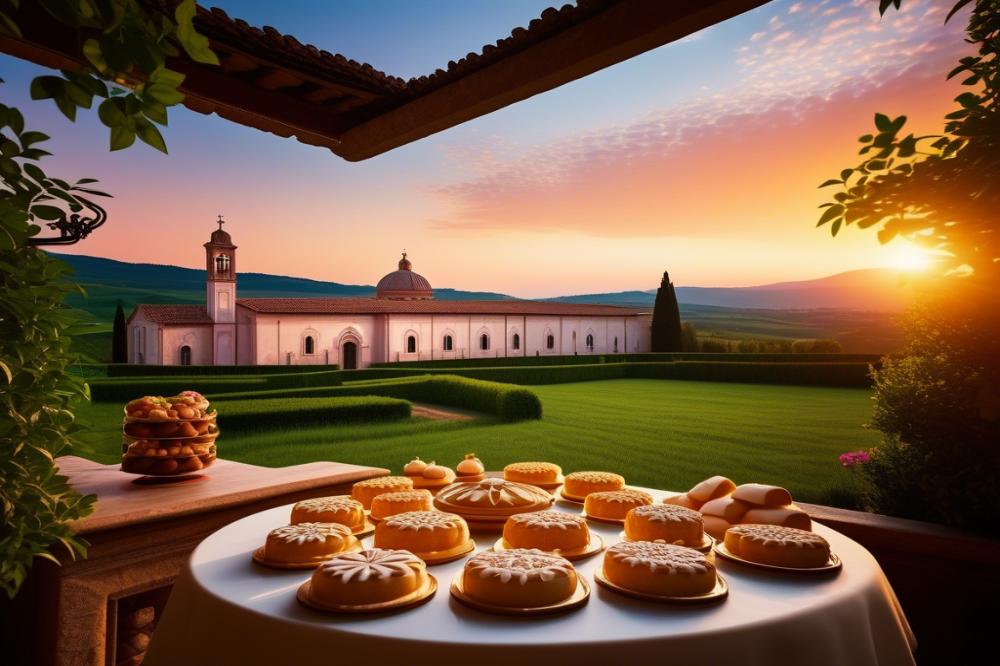
Italian monasteries have significantly impacted the country’s sweet traditions. Many famous desserts and pastries trace their origins back to these sacred places. Monks and nuns utilized their culinary skills to create delightful confections. The knowledge of monastic cooking passed through generations, influencing modern Italian recipes.
Key Desserts Linked to Monastic Life
One of the most cherished desserts is the Pan di Spagna, a light sponge cake. Monastic bakers perfected this treat over the centuries. It often served as the base for festive pastries. Another notable sweet is the Torta della Nonna, or Grandmother’s Cake. This classic showcases the combination of creamy custard and pine nuts, embodying flavors that comfort many. Pastry chefs today continue to celebrate these recipes at various religious festivals.
Traditional Recipes and Their Evolution
Not much has changed in some historical recipes over the years. Cannoli, for instance, originated in Sicilian convents. It began as a celebratory dish during Carnival, but now it symbolizes Italian dessert culture. Artesanal sweets like the Ricciarelli di Siena are another example. These almond-based cookies have retained their core recipe for hundreds of years, reflecting an unbroken line of culinary tradition.
Regional Variations and Historical Contexts
Italy’s varied regions offer distinct desserts shaped by local traditions. In the north, the creamy Pandoro cake reflects the festive spirit of winter celebrations. Southern regions favor treats like Cassata, a layered cake rich with fruit and ricotta. Each area’s influence stems from its agricultural history and monastic heritage, enriching Italy’s cultural tapestry.
Sometimes, abbey ales played a role in desserts as well. Monks, known for brewing, would incorporate these unique beers into pastries, enhancing their flavors. This combination created a harmonious balance that delighted taste buds. The interplay of sweetness and the rich history of brewing contributed to a wider array of culinary delights.
In summary, the blend of monastic traditions with local flavors crafts unique Italian desserts. These confections do not merely serve as food; they tell stories of faith, celebration, and cultural heritage. With every bite, one experiences a slice of Italy’s rich tapestry through its sweets.
Artisanal Sweets: The Legacy of Monastic Techniques
Monasteries played a crucial role in developing artisanal production methods for sweets. Nestled in serene landscapes, these religious communities dedicated countless hours to creating pastries and desserts. Their focus on precision helped to preserve ancient recipes that might otherwise have faded into obscurity. Many techniques stem from monastic cooking traditions that have been passed down through generations.
A significant aspect of this culinary legacy is the religious festivals celebrated within abbeys. These events brought communities together, allowing for the sharing of confectionery made with love and devotion. Unique desserts often marked these celebrations, highlighting the connection between spirituality and nourishment. Even the baking methods used can reveal broader tales of culinary history and craftsmanship.
Monks emphasized the use of local ingredients in their recipes, which fostered sustainable practices long before they became popular. By sourcing their honey, nuts, and fruits from nearby farms, they supported local economies and reduced waste. This commitment to the environment and community can still inspire today’s artisans who value quality and locality in their sweets.
Historical recipes from these monasteries are not just relics of the past; they remain relevant today. Chefs and bakers often turn to these time-honored methods when creating their unique treats. From rich chocolate tortes to delicate pastries, the influence of historical techniques is evident in modern confectionery. The journey to create these artisanal sweets is both a personal and cultural experience that connects generations.
In essence, the sweets crafted in these peaceful havens represent more than just delicious flavors. They embody a rich cultural heritage, blending spirituality, sustainability, and community. Each bite tells a story filled with rich tradition. As we enjoy these delightful creations, we must remember the monks whose hands shaped these delicious confections and passed down their knowledge.
The Cultural Significance of Confectionery in Monastic Life
From simple sweetness to delightful treats, desserts have always played an essential part in monastic life. Religious festivals marked the calendar with special meals, often featuring artisanal sweets made by dedicated monks. During Lent, for example, these spiritual communities would prepare treats that focused on ingredients like nuts, honey, and dried fruits. Special pastries became a joyful feature of Easter celebrations, symbolizing the end of fasting and a time for indulgence.
Monasteries served as centers for culinary history, sharing recipes that defined regions and conveyed messages of faith. Historical recipes passed down through generations offered a glimpse into the creativity and skill of these cloistered chefs. By creating unique confections, they expressed their devotion and contributed to the strengthening of community bonds. Each sweet was not just a dessert; it symbolized shared beliefs and traditions.
Religious events brought people together, and sweets fostered a sense of belonging. Monks often opened their doors to villagers, inviting them to partake in lavish feasts. These occasions showcased not only abbey ales but also various confections that would delight guests. Sharing food created connection, reinforcing social ties and mutual support. Festivals turned the ordinary into memorable celebrations, all thanks to the enthusiasm of those who prepared the exquisite offerings.
Cultural heritage is intricately woven into the fabric of Italian monastic traditions. The art of monastic cooking extends beyond basic nourishment; it represents countless hours of reflection and meticulous work. This culinary legacy continues to thrive today, with modern bakers influenced by the timeless methods and ingredients loved by monks. Confectionery transforms mere food into an emblem of faith, community, and history.
Final Thoughts on the Influence of Monastic Traditions
The impact of monastic contributions on Italian sweets cannot be understated. These sacred places played a significant role in developing recipes that remain cherished today. Through time, they preserved the art of creating delicious desserts and pastries that reflect their culture. Each recipe tells a story, revealing the spirit of innovation even within the walls of religious life.
Preserving these historical recipes is crucial. Not every kitchen can replicate the age-old practices, but with effort, people can keep the traditions alive. Recipes passed down through generations hold immense value. They connect us to our past and provide insight into the local heritage.
Exploring the landscape of Italian confectionery products can be a delightful journey. Tastes and textures vary widely across regions, making each discovery exciting. When people engage with these sweets, they also engage with history. Whether it’s a simple cookie or a complex cake, each item reflects the craftsmanship of its origin.
In conclusion, let’s cherish and appreciate these culinary treasures. They are more than just treats; they represent a tapestry of culture and tradition. Each bite holds the essence of a rich history waiting to be savored and celebrated.

