
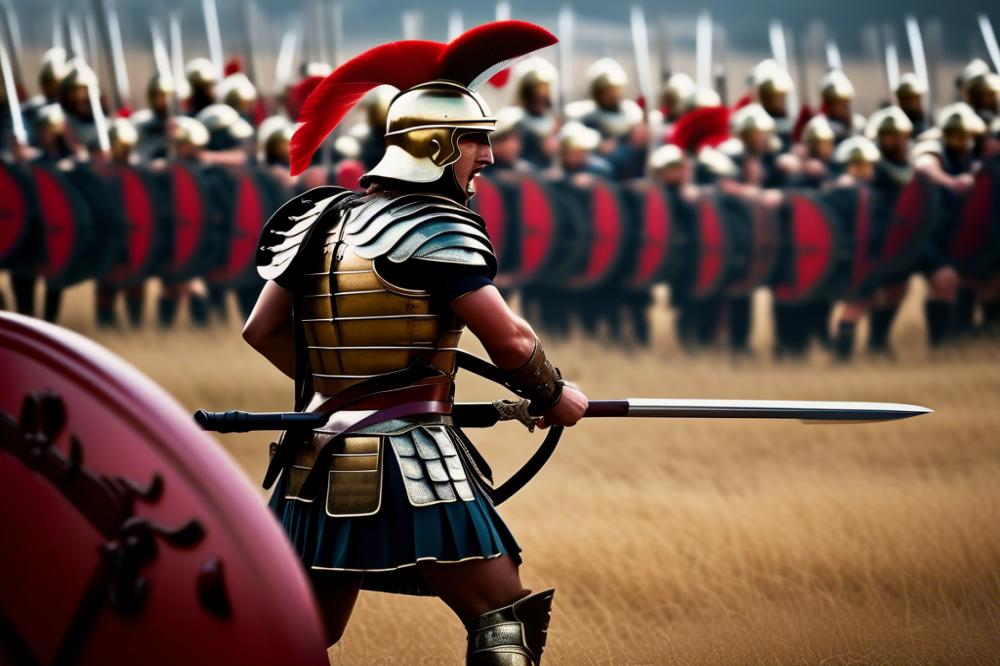
Field Weapons of the Roman Army: Adaptations for Different Battles
The Roman army stands as one of the most formidable military forces in history. Its organization and discipline have long fascinated historians and scholars. Central to its success was the adaptability of its strategies and equipment. A skilled army requires not just trained soldiers but also effective weaponry. The Roman legions demonstrated that diverse #field_weapons# were crucial to securing victories in various contexts.
Weaponry played a vital role in battles. It was not simply about having arms; it meant knowing which weapons to use in specific circumstances. The Romans recognized that each conflict posed its own challenges and demands. Consequently, their soldiers wielded a wide array of tools designed for different types of warfare. From the javelins hurled by skirmishers to the heavy swords of infantry, each item had a purpose that contributed to the army’s overall effectiveness.
Diversity in field weapons allowed the Romans to respond to myriad combat conditions. They developed distinct types for urban warfare, open-field battles, and sieges. Ballistae and onagers could launch devastating projectiles from a distance. Meanwhile, the gladius served as a close-combat weapon that was both lethal and practical. Such variations were not only essential for adaptations but were also a testament to Roman ingenuity.
Understanding the evolution of their armaments gives insight into how Rome maintained control over vast territories. The mastery of diverse weaponry underscored the army’s importance in expanding and protecting the empire. With #anchor_text_1# as a key focus, it is evident that weapon adaptations were fundamental for the Romans. Exploring this topic reveals the intricate relationship between military success and technological progress. Therefore, the legacy of their diverse arms continues to be felt in military practices even today, reflecting a strategic mindset that ensured triumph on countless battlefields. Furthermore, examining these innovations leads to a greater appreciation of the Roman military accomplishments that shaped history. #anchor_text_2# offers a deeper understanding of how and why the Roman army became an enduring symbol of military prowess.
Historical Context of Roman Military Weaponry
The evolution of weaponry in Rome reflects the changing needs of its army. Early Roman soldiers relied primarily on simple tools like spears and shields. As the Republic grew, so did the complexity of its arms. By the time of the Empire, soldiers employed various specialized weapons tailored for different combat scenarios.
Key battles marked significant shifts in military technology. The Battle of Cannae in 216 BCE highlighted the need for versatility. Roman commanders learned that adaptability could mean the difference between victory and defeat. This prompted innovations like the gladius, a short sword designed for close combat. Enhanced strategies led to the introduction of new siege weapons, which were crucial during the campaigns against fortified cities.
Military reforms played a critical role in standardizing equipment. Gaius Marius, a notable general, initiated changes around 107 BCE. His reforms created a more professional army, allowing weapon specifications to become uniform. By standardizing weapons, soldiers became more effective on the battlefield. The legions could now operate with cohesion and precision.
Different environments also shaped the development of Roman arms. Desert campaigns required lighter gear, while forested regions necessitated weapons suited for ambush tactics. Adjusting to various geographical challenges fine-tuned how Romans approached warfare. New advances often emerged after conflicts, as soldiers learned from their experiences and adapted their tools accordingly.
Ultimately, the interaction of different elements defined the legacy of Roman military weaponry. Advances didn’t happen in isolation but rather in tandem with changing tactics and emerging threats. Understanding this historical context illuminates how the Roman army became a formidable force across its vast empire.
Primary Weapons Used in the Roman Army
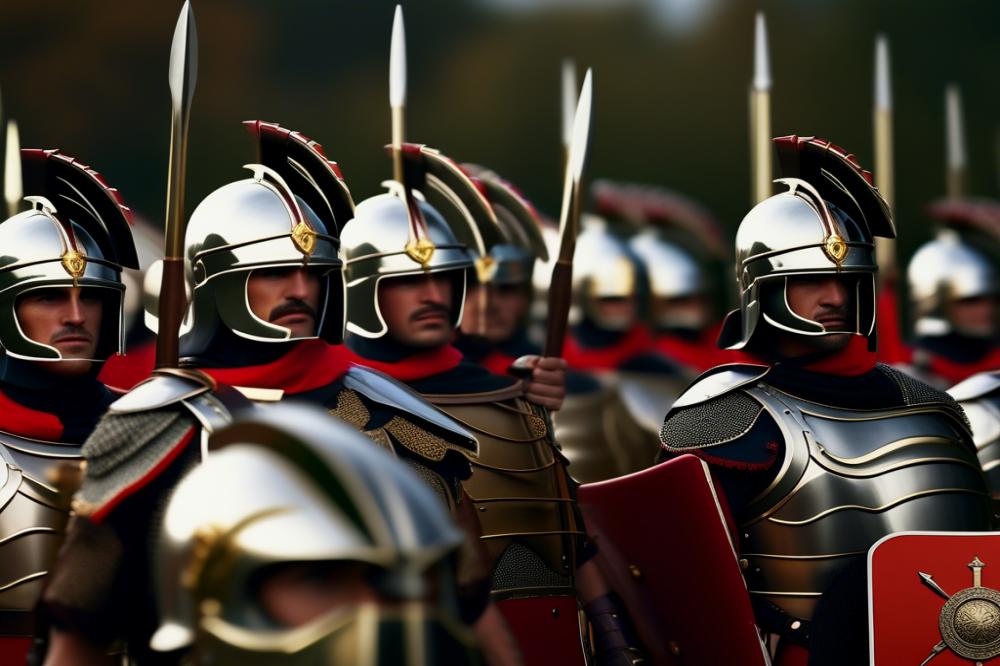
The field weapons of the Roman Army played a crucial role in their military effectiveness. Three primary weapons often highlighted are the gladius, pilum, and scutum. Each item served specific purposes on the battlefield, reflecting the tactics and strategies of the Roman legions.
Overview of Primary Weapons
The gladius is perhaps the most iconic Roman weapon. This short sword, typically around two feet long, was designed for close combat. Its pointed blade excelled at thrusting, allowing soldiers to pierce armor with great efficiency. Stability came from its double-edged construction, making the gladius versatile in various fighting styles.
Another key weapon is the pilum. This heavy javelin was used for throwing before engaging in close quarters. The design featured a long iron shank and a wooden shaft, making it both aerodynamic and deadly. Soldiers would throw their pila at enemy formations to disrupt them. If the weapon struck a shield, it often bent upon impact, rendering it useless for the opponent.
The scutum rounded out the primary weapons of the Roman Army. This large, curved shield not only provided excellent protection but also absorbed impacts from projectiles. Legionaries would use their scutum not only defensively but also offensively. When in formation, they created a wall of shields that made it difficult for enemies to penetrate.
Variations in Weapon Types Based on Soldier Class
Differences exist in weapon types based on soldier class. Legionaries, the backbone of the Roman Army, utilized the gladius, pilum, and scutum extensively. Their training and discipline allowed them to maximize the effectiveness of these weapons.
Auxiliary troops, often recruited from provincial areas, had a different set of armaments. While some auxiliary soldiers wielded gladii, many preferred longer swords. These combined longer reach with less weight, allowing for quick strikes. Their choice of weapon reflected their varied fighting styles and regional backgrounds.
Overall, the Roman Army’s weaponry was not one-size-fits-all. Each soldier class contributed distinct adaptations. Legionaries relied on the tried and true methods, while auxiliaries showcased the flexibility of Roman military practices.
Adaptations for Specific Battles and Environments
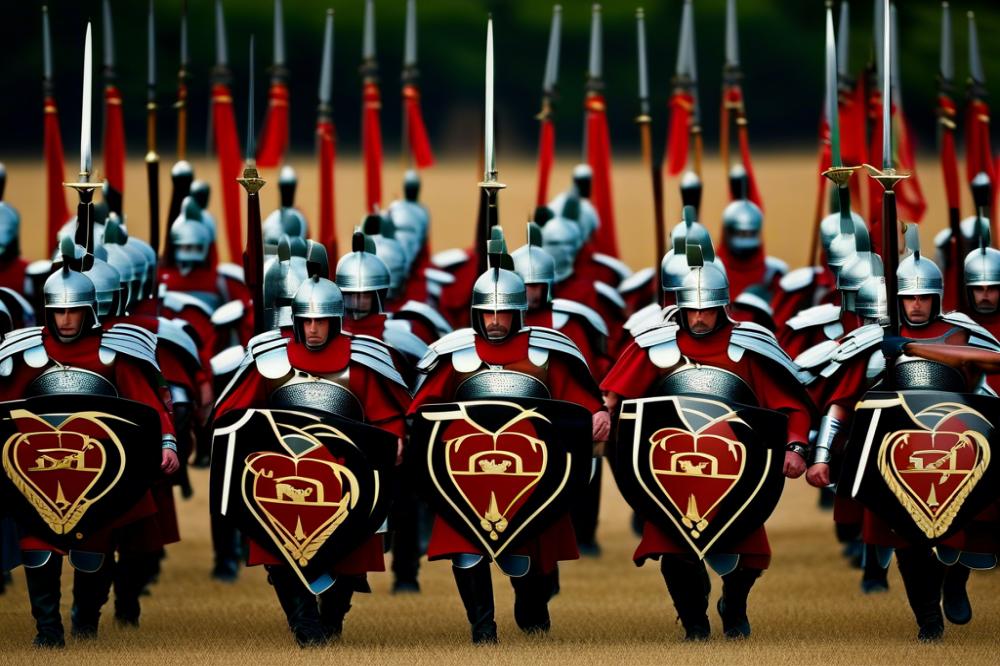
The Roman army was remarkable at modifying its weapons for specific battles and environments. This adaptability often made the difference in their effectiveness on the battlefield. For instance, when barbarians threatened the Roman Empire, the legionaries adjusted their tactics and tools. They chose to employ heavier javelins in open fields. This gave them the range needed against mobile foes.
Geography played a significant role in weapon choice as well. In urban areas, where narrow streets limited movement, the Romans relied on shorter swords like the gladius. That design was practical for close-quarter combat. On the other hand, in hilly or mountainous regions, versatility was crucial. Troops needed weapons that allowed for easy maneuverability. The pilum, a type of spear, was favored for its ability to be thrown or used in hand-to-hand fighting.
Case Studies: Alesia and Teutoburg Forest
During the Siege of Alesia, the Romans faced a well-fortified Gallic stronghold. They utilized their siege engines effectively. These included ballistae and onagers, which could launch stones and projectiles over the walls. Soldiers often adapted their strategies to include ranged attacks, maximizing the use of these machines. This allowed them to weaken enemy defenses before a full assault.
In the Teutoburg Forest, however, the environment drastically transformed tactics. Thick woods and marshy ground negated the advantages of large formations. Roman soldiers found themselves fighting in small, tight groups. Here, they preferred the short gladius for quick strikes. As a result, this adaptation showcased their ability to navigate and combat in challenging terrain.
The variations in weaponry reveal much about how the Romans faced different challenges. Each battle presented unique obstacles that required an innovative response. Romans not only changed their arms but also their strategies in response to their surroundings. This flexibility was key to their military success across diverse landscapes.
Integration of Auxiliary Forces and Their Weaponry
Role of Auxiliary Troops in the Roman Military Structure
Auxiliary troops played a crucial part in the Roman army. Often composed of non-citizens, these soldiers came from various cultures and regions. They provided specialized skills that Roman legions might lack. Many were skilled horsemen or archers. Their inclusion allowed the army to expand its tactical options. Auxiliary forces could also fill gaps in manpower during large campaigns. This blend of different backgrounds enhanced the overall effectiveness of military operations.
Comparison of Roman Weapons with Those of Allied and Conquered Cultures
When examining weapons of the Roman army, contrasts with foreign armaments are evident. Romans primarily relied on the gladius, a short sword designed for close combat. In contrast, some allied forces favored longer spears or javelins. Their preferences often reflected cultural fighting styles. For instance, Celts wielded large two-handed swords, while Numidians excelled with light, fast weapons. Such diversity in armaments showcases how adaptable the Romans were. They learned from their allies and frequently adopted foreign technologies or techniques to improve their own.
Notable Adaptations Made by Auxiliaries for Local Warfare Effectiveness
Auxiliary troops often modified their equipment for specific battles. In the rugged terrain of Britain, for example, they moved away from heavier armor. Light armor allowed for greater mobility when facing guerrilla tactics. Some auxiliaries adopted native weapons, like the longbow, to improve ranged combat. In the desert campaigns, local cavalry learned to conduct swift hit-and-run tactics. These adjustments proved essential for achieving success in varying conditions. By integrating local methods, auxiliary forces significantly increased their utility on the battlefield. The Romans recognized these innovations and often encouraged their use among the entire army.
Innovations and Technological Advances in Roman Weaponry
During the Roman Empire, weapons engineering underwent significant advancements. This period marked a time of creativity and adaptation. Innovations were driven by the shifting needs of warfare. Engineers sought to refine existing designs and introduce improvements.
The use of new materials played a vital role in weapon evolution. For instance, the incorporation of different types of iron improved swords like the gladius. These blades became sharper and stronger, allowing soldiers to fight with greater effectiveness. Additionally, new techniques in metallurgy led to better armor. Soldiers enjoyed greater protection while still maintaining mobility.
Roman military leaders did not ignore the influence of their foes. After defeating various enemies, they often studied captured weapons. This led to the adoption of features from adversarial designs. For example, local tribes wielded weapons that had distinct advantages. Incorporating those elements allowed the Romans to enhance their own armaments.
Adaptability became a hallmark of Roman military success. They were not afraid to change tactics or gear depending on the circumstances. The development of siege engines, such as the onager and theballista, showcased this trend. Both proved effective in taking down enemy fortifications and changing the course of battles.
Feedback from soldiers in the field also shaped weapon design. Creators listened to the experiences of troops. This connection ensured that newly crafted tools met practical needs. Adjustments were made based on actual combat conditions. Understanding user experience has been essential throughout history, and the Romans were no different.
As the Empire expanded, diverse influences became apparent. Each new region added its cultural touch to Roman weaponry. This exchange of ideas enriched their arsenal. The consequences were clear: adaptability in combat led to military dominance. Innovations continued to surface, proving the Romans were skilled engineers and adaptable soldiers.
Final Thoughts on Roman Military Adaptations
The ingenuity of Roman field weapons played a crucial role in the military achievements of the empire. Adaptability allowed soldiers to respond effectively to various battle scenarios. This capability not only enhanced their combat efficiency but also contributed to the overall strength of the Roman legions. Each weapon, from the pilum to the gladius, was designed with specific tactics and enemy weaknesses in mind. Such flexibility in arms helped Roman forces secure victories against diverse foes across different terrains.
Additionally, the legacy of these weapons extends far beyond the battlefield. Many principles derived from Roman tactics still influence military strategies today. Modern armies analyze how adaptive designs can improve their own capabilities. Thus, the study of Roman weaponry offers valuable lessons on the importance of customization in warfare. As conflicts evolve, the adaptability showcased by the Romans proves timeless.
In summary, the success of the Roman army can largely be attributed to their inventive weaponry and strategic mindset. This unique approach laid foundations for future military innovations. Observing how they embraced change reveals lessons for current and future combat strategies. Overall, reflecting on how weaponry evolved during Roman times highlights a significant chapter in the history of warfare, offering rich insights for military scholars and enthusiasts alike. For those interested in diving deeper into this topic, various historical documents and analyses can serve as great resources, including works by historians tackling the nuances of tactical warfare. #anchor_text_3# and #anchor_text_4# resonate with the enduring impact of those ancient innovations.

