
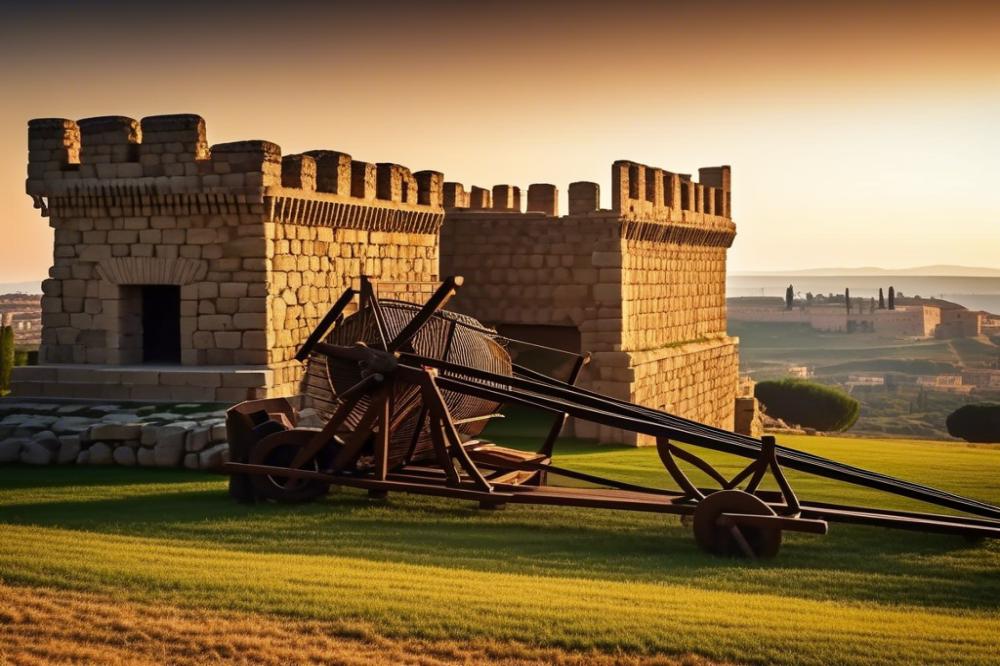
Siege Engines of Rome: An Introduction
Roman military innovations shaped the landscape of ancient warfare. Their approach to battle was not just about soldiers clashing with swords. It involved a range of tools and strategies that gave them an edge. Among these innovations, siege engines played a major role in determining the outcomes of conflicts. Devices like the ballista and onager were not merely machines; they were pivotal in breaking through fortified positions.
Siege engines significantly influenced how battles unfolded. They allowed armies to strike from a distance, softening enemy defenses before ground troops advanced. This technology transformed warfare, highlighting the importance of engineering in military strategy. In sieges, the precision and power of these engines often dictated victory or defeat. Understanding their impact is essential when studying ancient battles.
There’s also a fascinating relationship between siege engines and the soldiers who operated them. Equipment and attire were designed considering the weapons and tools of the day. A Roman soldier’s armor was crafted not just for combat but to ensure comfort while climbing the structures that housed these massive machines. The design of helmets and shields had to accommodate the reality of warfare, including interactions with these bulky contraptions.
Roman warfare was a complex system where every element mattered. From the clothing worn by soldiers to the engines used against city walls, everything was part of a larger strategy. Exploring these connections reveals how the Romans approached warfare with intelligence and creativity. The effective use of siege engines was crucial for their success on the battlefield and established their dominance over far-reaching territories. For those looking to understand the essence of Roman military might, focusing on these mechanical marvels is key. These innovations laid the groundwork for future developments in the field, making them a topic worth examining closely.
Examining the Roman way of war helps to appreciate the connection between tools and tactics. By understanding the role of siege engines, one can gain insights into broader military practices. To dive deeper into the world of Roman siege engines, consider exploring #anchor_text_1# and its implications in ancient warfare. If you seek to uncover how these machines impacted battle strategies, discussing the significance of #anchor_text_2# will also prove enlightening.
The Evolution of Siege Technology in Rome
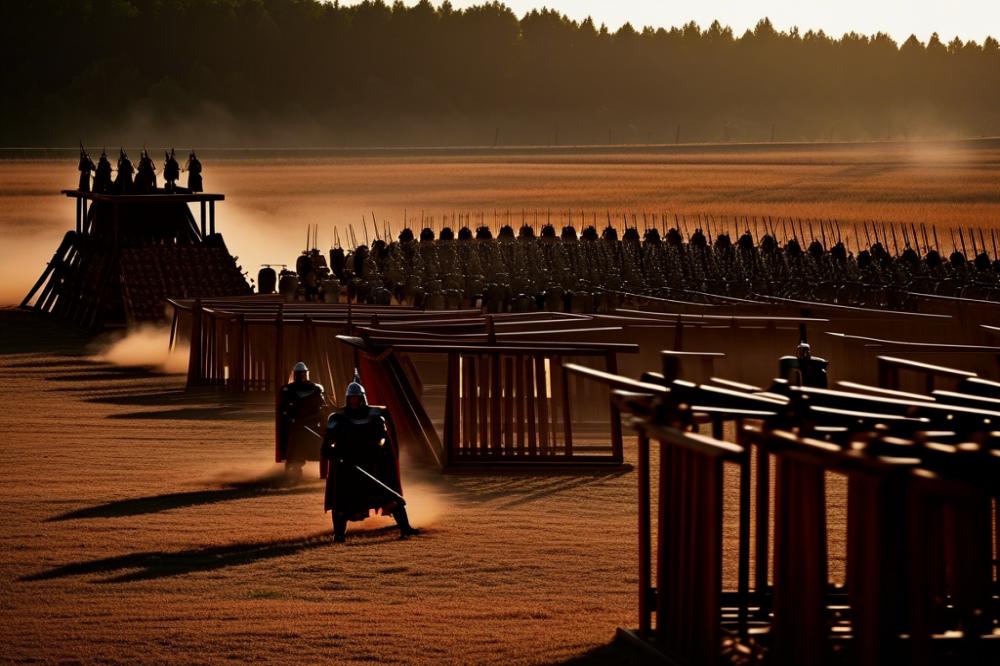
In the early days of Rome, siege warfare relied on basic tactics. The Romans often used simple wooden towers and ladders to assault fortifications. A straightforward approach worked well during their initial military campaigns. However, the growing complexity of warfare required more than just brute force.
Greek and Carthaginian innovations greatly influenced Roman siege capabilities. Greek engineers had developed remarkable machines, like the torsion catapult. This technology fascinated many Roman military leaders. Likewise, the Carthaginians introduced various siege tools in their battles against Rome, highlighting the necessity for improvement.
As conflicts escalated, Rome’s approach to siege engines underwent a significant transformation. Simple devices evolved into sophisticated machines. With the advent of powerful artillery units, the Romans could effectively breach formidable walls. Innovations such as the ballista and onager showcased their engineering prowess.
These advanced pieces were more than just tools of war; they became symbols of Roman ingenuity. The ability to hurl heavy projectiles over great distances changed the landscape of battle. Consequently, the evolution of siege technology marked a crucial phase in Roman military history.
Overall, the journey from basic tactics to complex implements illustrates Rome’s adaptability. Engineers continuously improved designs based on previous experiences and gained knowledge. As they integrated various techniques, the Romans solidified their dominance on the battlefield.
The Ballista: The First Major Siege Engine
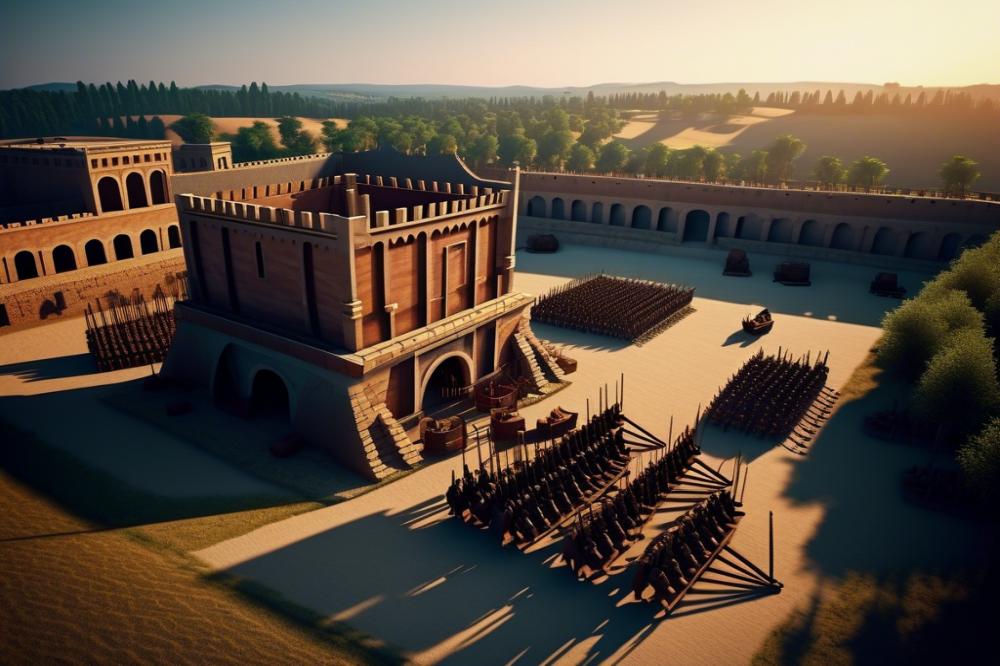
The ballista is one of the most significant innovations in ancient warfare. This large weapon resembles a giant crossbow. It uses two arms, which twist as the tension in the twisted ropes or sinews builds. Once ready, the ballista hurls large bolts or stones at enemy fortifications. This mechanism allowed for more forceful and accurate strikes than earlier designs.
In Roman military strategy, the ballista served a crucial role during sieges. Commanders utilized it to weaken walls and towers. By targeting specific points, the weapon could create breaches in defenses. This artillery played a part in overwhelming enemy positions before ground troops launched their assaults. The use of the ballista marked a shift in how armies approached warfare, especially during sieges.
Compared to earlier projectile weapons, the ballista represented a remarkable advancement. Traditional slings and bows relied on the strength of individual soldiers. Those older tools had limited range and power. On the other hand, the ballista’s engineering allowed for sustained fire and greater impact. Roman forces could now strike from a distance, giving them a tactical advantage on the battlefield.
Understanding the ballista’s significance also requires comparing it to other siege equipment. The mangonel and the onager came later, building on the concepts introduced by this earlier technology. While all these machines aimed to breach defenses, the ballista’s precision was unmatched. Roman ingenuity is evident in how they adapted these designs for their needs.
Overall, the ballista stands as an essential element in the history of siege engines. Its design reflected Roman military prowess and innovation. With the ability to launch powerful projectiles over considerable distances, it changed the dynamics of siege warfare.
The Onager: A Powerful Catapult
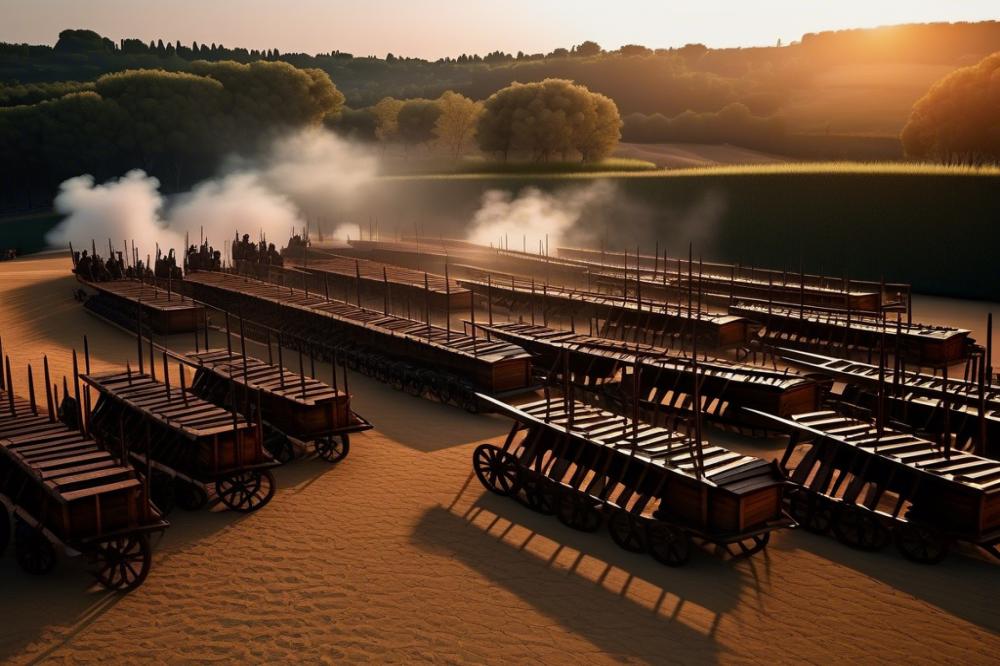
The onager was a significant development in Roman siege warfare. Its design featured a long arm that could fling projectiles over walls. Often compared to a giant slingshot, this engine used a torsion power mechanism. Greek and Roman engineers perfected its construction, allowing for greater range and accuracy. A large frame supported the arm, which was pulled back using twisted ropes made from animal sinew. When released, it hurled stones, fireballs, or other munitions toward enemy fortifications.
Usage in Siege Warfare and Its Advantages
During sieges, the onager proved essential for breaching defenses. Its ability to launch heavy stones made it easier to damage stronghold walls. The projectiles could shatter stone or create chaos among the defending troops. This catapult could launch its payload from a safe distance, keeping operators out of range of enemy archers. Teams often operated the machine quickly, maintaining a steady rate of fire. Additionally, it was effective against wooden structures like towers and gates. The onager excelled in causing destruction while minimizing risk to the attackers.
Differences between the Onager and Other Siege Engines
One key difference between the onager and other siege engines, like the ballista, lies in its firing mechanism. The ballista resembled a giant crossbow and shot bolts or heavy arrows. In contrast, the onager tossed larger projectiles using a swinging arm. Furthermore, the onager’s simplicity added to its appeal. It required fewer skilled operators compared to the more complex mechanisms of other engines. Both siege devices were essential to Roman military tactics, showcasing their mastery of engineering.
In terms of mobility, the onager was often easier to transport. Troops could disassemble it for quick redeployment across the battlefield. This capability offered advantages in dynamic warfare situations where positions constantly changed. While the ballista was more precise at shorter distances, the onager made up for this with its sheer destructive power. Each siege engine played a unique role, but the onager stood out for its effectiveness in dismantling strong defenses.
Other Notable Siege Engines
The Roman army relied on various siege engines beyond the well-known ballista and onager. These machines played crucial roles in their military campaigns. Among them were the tortoise, the battering ram, and the vinea.
The Tortoise
The tortoise, or testudo, was a clever design meant for protection. Soldiers would align their shields to create a shell-like formation. This system shielded them from projectiles while they approached enemy walls. It resembled a tortoise, hence the name. The soldiers moved in unison, making it a powerful tool for advancing against fortified positions.
The Battering Ram
The battering ram was another essential siege engine used by the Romans. This device typically consisted of a heavy log mounted on a framework. Soldiers would swing it against gates or walls with great force. By using the ram effectively, armies aimed to break through defenses quickly. Often, it was accompanied by protective structures to guard the operators from arrows and stones.
The Vinea
The vinea, also known as a siege shelter, provided cover for troops during assaults. It was essentially a movable structure, designed to protect soldiers as they got closer to enemy walls. Made of wood and often covered with hides, this shelter allowed Roman forces to operate beneath its roof safely. It complemented the tortoise and battering ram, helping to coordinate attacks while minimizing casualties.
Each of these siege engines had its purpose, working in harmony with the more destructive ballistae and onagers. The combination of these devices created a formidable arsenal for the Roman military. As such, they were central to successful sieges throughout the Roman Empire. Their effectiveness relied on teamwork and strategy, highlighting the ingenuity of ancient warfare. Soldiers knew how to deploy these tools together, ensuring maximum impact against their adversaries.
The Impact of Siege Engines on Roman Warfare
Siege engines like the ballista and onager played a pivotal role in Roman warfare. Many battles were swayed by the might of these machines. At the Siege of Masada, Roman troops used massive projectiles to breach the fortress walls. This marked a turning point in how Romans approached fortified strongholds.
Victories achieved through siege technology often led to expanded territory. The Roman Empire stretched further as cities fell one after another. Military leaders adapted their strategies to include these powerful devices in their plans. The sight of a ballista on a battlefield often signaled inevitable defeat for defenders.
Long-term Effects on Military Tactics
Over time, siege engines revolutionized military tactics. Armies began to prioritize the development of these devices to maintain a competitive edge. Engineering skills improved as soldiers learned to build and deploy these machines under pressure. Tactics evolved from brute force to more calculated strategies involving siege technology.
Using such engines changed the landscape of warfare. Fortifications became less effective against Roman forces. The ability to launch projectiles over walls shifted the focus of battles. Instead of just defending, cities had to rethink their entire approach to warfare.
Decline of Fortified Cities
As the effectiveness of siege engines rose, fortified cities fell into decline. Walls that once seemed impenetrable became vulnerable. The fear of a ballista could deter even the strongest defenders. Many cities hastily abandoned traditional stone walls for looser defenses, often leading to their downfall.
Some historical records show that entire civilizations crumbled under the weight of Rome’s siege tactics. Fortifications were seen as less of a safe haven and more of a hindrance. The strategic use of these engines also fostered a sense of urgency within enemy territories. Panic could easily spread when siege engines approached the gates.
Final Thoughts on Roman Siege Engineering
Siege engines played a crucial role in shaping military strategies during the Roman era. They allowed the Romans to overcome fortified cities, which were once thought to be impenetrable. Innovations like the ballista and onager did not just enhance the effectiveness of sieges; they altered the course of battles and expanded the empire’s reach. Such devices demonstrated the power of Roman engineering and ingenuity in a world where control over territory often meant control over resources and people.
Later military advancements greatly benefited from Roman siege technology. The techniques developed during this period influenced not just the construction of siege engines but also the tactics used by future armies. Armies in the Middle Ages would adopt similar methods, adapting the ballista and, eventually, artillery as warfare evolved. These early machines set the stage for developments in siege tactics, showcasing the lasting impact that Roman innovations had on military history.
The legacy of Roman siege engineering is evident even today. Many fundamental principles from that time continue to inform modern military strategies and technologies. The way sieges were conducted then laid groundwork for future conflict. A greater understanding of these ancient methods opens doors to appreciating how military tactics have shifted throughout history. Scholars and enthusiasts alike will never fully grasp the depth of warfare’s evolution without acknowledging the contributions of that era.
The ingenuity of Roman engineers reflects a unique blend of creativity and practicality. In many ways, their work was a testament to the Roman commitment to conquering both the land and the challenges posed by fortified structures. The legacy of this technology and its impact on warfare showcases the meticulousness of Roman planning and execution. Recognizing these contributions helps us grasp the larger narrative of human conflict and engineering, making it an enduring point of interest for historians and military strategists alike. For those keen to explore further, there are numerous resources available to dive deeper into the mechanics and strategies used, highlighting the innovative spirit that powered the empire’s military successes. Check out #anchor_text_3# for more insights or connect with experts at #anchor_text_4# to expand your understanding.

